Article
Private Club Member Recognition: Beyond the First Greeting
Member recognition must last from arrival to departure. Learn how to bridge the gap between departments and ensure member preferences aren't lost mid-visit.
David LeibellOctober 15, 20265 min read
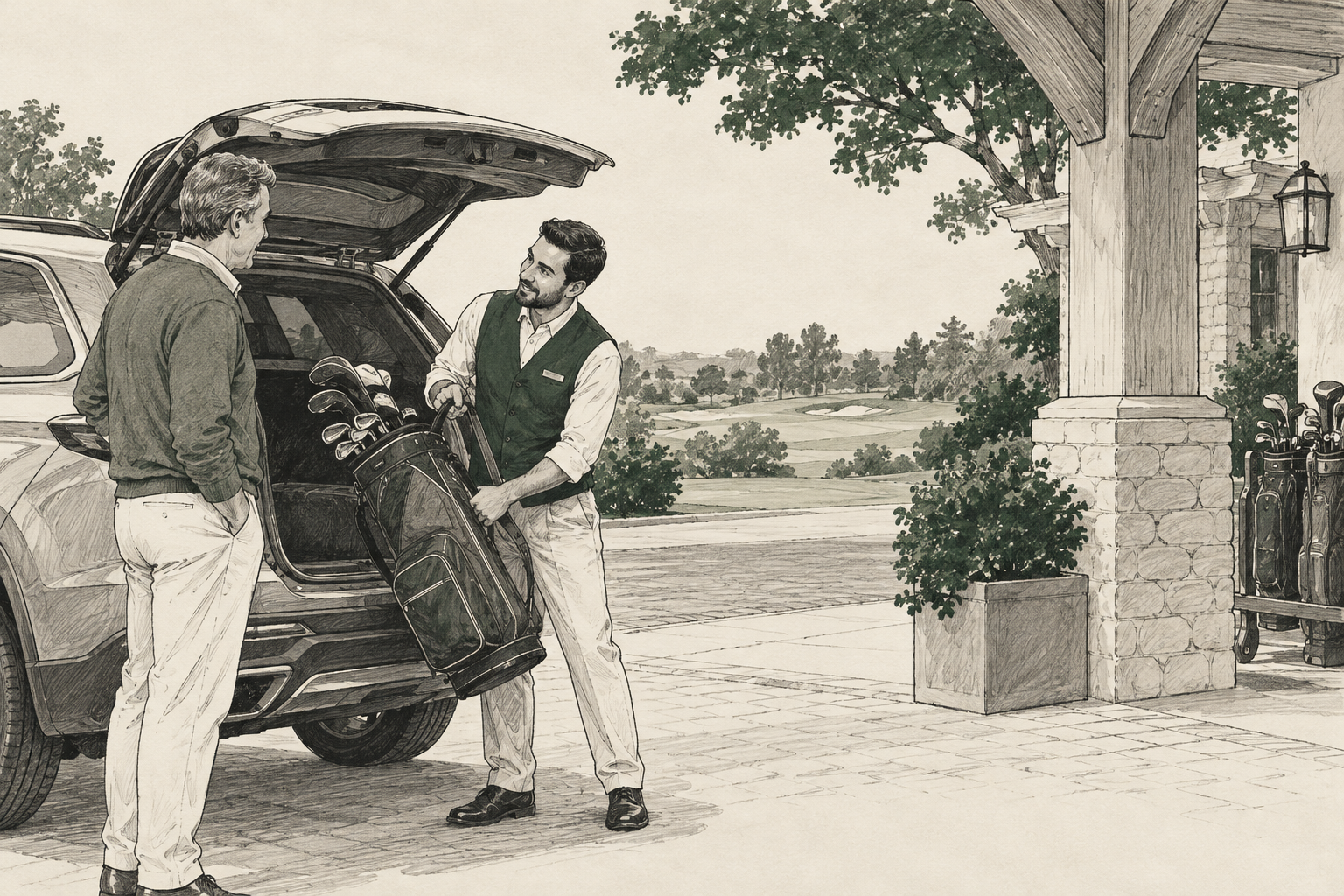
To keep member recognition consistent throughout a private club visit, staff require relevant context before each interaction, clear ownership of service requests, and a verification system for promised actions. While a familiar greeting at the front gate begins the experience, the continuity of recognition is defined by how information flows between dining, activities, and departure. True member recognition is not a greeting; it is the use of member knowledge to change a service outcome.
Your bag room attendant knows every member’s name. Your host remembers their preferred table. Your golf professional could identify half the membership by their backswing. However, friction occurs when a member moves from the course to the grill and finds they must explain their preferences or guest needs all over again.
The member does not see departments; they see one club. When information fails to travel from the bag room to the dining room, the member feels the club has forgotten what it already knew.
What does member recognition look like after arrival?
Member recognition means using relevant knowledge to make an interaction more personal and useful. After the initial arrival, this includes acknowledging a guest’s first visit, adapting to a change in plans, or following through on a promise made by a colleague in a different department.
It does not require every employee to repeat the member’s name. Instead, it requires the next employee in the journey to understand what matters for the next phase of the visit. This is a core component of service orchestration, where data is turned into immediate staff action.
The practical test for a General Manager is simple: does the member feel that the club remembers the conversation, even when the employee changes?
How recognition breaks during a club visit
Consider a typical Saturday. A member, Tom, arrives with a guest, Ray. Tom mentions to the bag room attendant that Ray has difficulty hearing and would prefer a quiet table for their 1:00 PM lunch. The attendant promises to "take care of it."
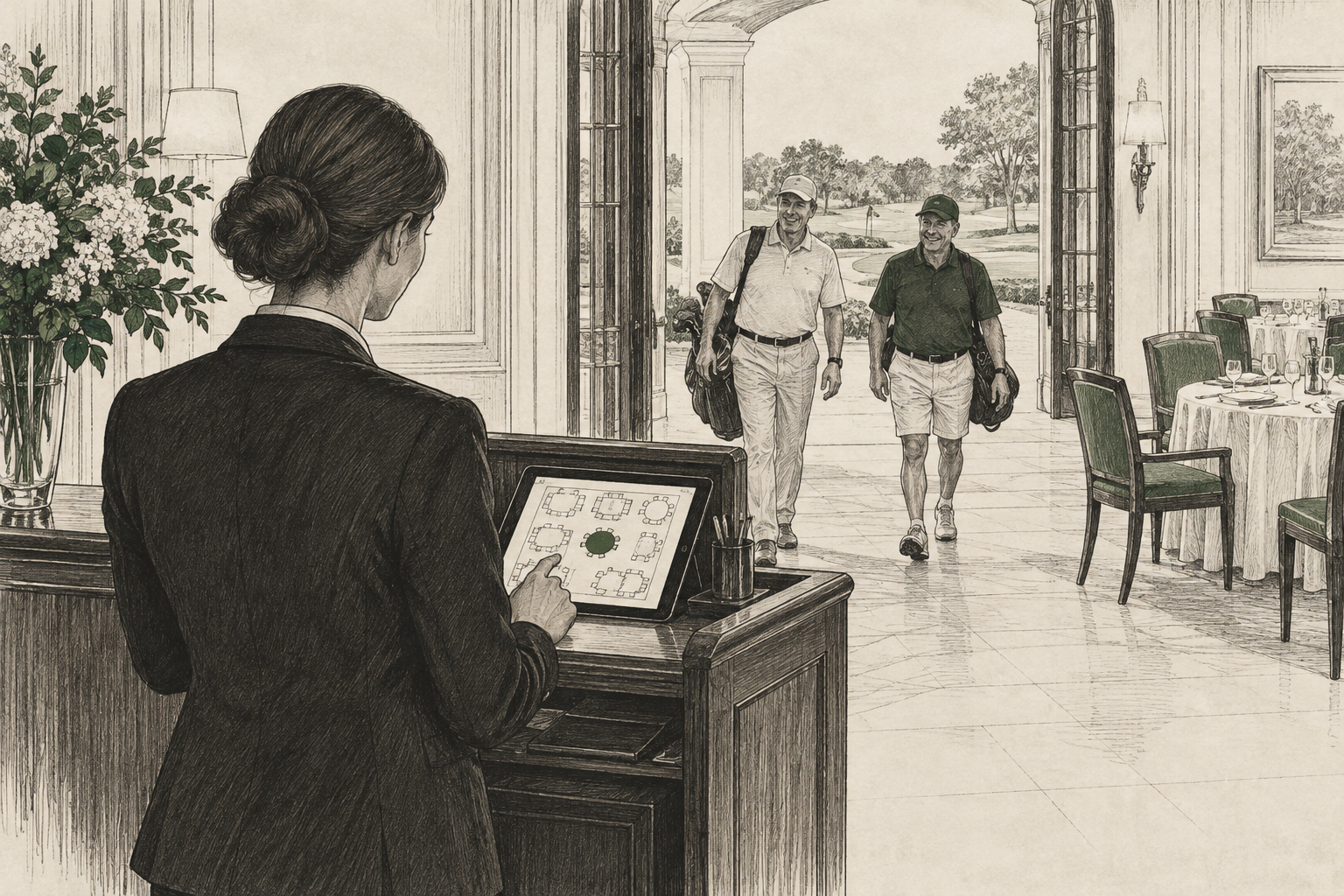
When Tom arrives at the grill, the host—unaware of the request—leads them to a table next to a loud, large party. Tom has to ask for a quieter spot, forcing the host to scramble for a new table. Later, Tom asks his server if he can host Ray for golf again next week. The server promises to check with the shop, but by the time Tom leaves, no one has an answer.
In this scenario, every employee was friendly, but the visit required Tom to reconnect the pieces of his own experience. This is the gap: recognition that works in isolated moments but lacks continuity across the visit.
What information should carry from arrival to departure?
Staff do not need a member's entire history; they need the specific context that changes the next service decision. For a visit like the one described above, the flow of information should look like this:
| Service Moment | Relevant Context | The Recognition Action |
|---|---|---|
| Arrival | Guest is visiting for the first time. | Attendant welcomes the guest by name and explains the post-golf flow. |
| Lunch Prep | Member requested quiet seating. | Host identifies suitable tables before the party finishes their round. |
| Seating | Seating preference already shared. | Host acknowledges the preference immediately upon arrival at the grill. |
| During Lunch | Member has a specific booking query. | Server identifies the owner of the answer and sets a response expectation. |
| Departure | Request is resolved or pending. | Member receives the answer before they have to ask the golf shop. |
A checklist for measuring service continuity
To understand where recognition is failing, a General Manager should observe a complete member journey from start to finish. Use this diagnostic checklist with department heads to identify where the "handshake" between staff members is dropping.
- 01
Recognition Check
Did staff use information the club already held to change a service decision?
- 02
Repetition Count
Did the member have to repeat a preference or request to a second or third person?
- 03
Ownership Assignment
When an employee made a commitment, was an owner and timeframe established?
- 04
Continuity Flow
Did a change in the member's plans (e.g., lunch timing) reach the next department?
- 05
Closure Verification
Did the member receive an answer to their query before they had to follow up themselves?
Does a better pre-shift meeting solve the problem?
A pre-shift meeting is excellent for preparing employees for what is already known. For example, the CMAA’s Anthem Insider highlights how daily communication regarding birthdays, anniversaries, and club events can provide common context across departments.
However, preparation and follow-through are different challenges. A morning briefing can tell the team that a specific member is visiting, but it cannot anticipate a request made mid-meal.
For real-time needs, staff require a dependable way to capture a request, route it to the responsible person, and close the loop. Technology like a service orchestration platform becomes necessary when the club can capture information but fails to get it to the right employee in time.
When to introduce technology
Technology should support an existing operational standard, not replace it. If your team has a process but struggles with the "human lag" of communication, Knownly's approach can bridge the gap by connecting presence data to specific service actions.
Before adding new tools, verify if your systems of record are being used to their full potential. If the data exists but isn't prompting action, you are facing a coordination problem that requires orchestration.
Ultimately, the member should notice that service feels easier, not how much information traveled behind the scenes. Recognition is at its best when it feels like a seamless, natural extension of the club's hospitality.
Frequently asked questions
- How can private clubs maintain member recognition throughout a visit?
- Clubs maintain recognition by providing staff with relevant context before interactions, assigning clear owners to every member request, and verifying that every promise is fulfilled before the member departs.
- Should every department have access to all member details?
- Staff should only have access to information relevant to their specific role; for example, a host needs seating preferences, but does not necessarily need the private details behind a member's guest visit.
- How is recognition different from greeting a member by name?
- A name greeting is an act of identification, while recognition is the act of using member data (like a favorite drink or a hearing difficulty) to proactively adjust service.
David Leibell
Published October 15, 20265 min read
Knownly
See how recognition works at your club
Tell us where you are and we'll talk through what this looks like on your floor.
Related reading
ArticleMember Recognition
How to Improve Service Consistency at a Country Club
Improve consistent service delivery at your country club across shifts and seasonal staff using a structured handoff procedure, role matrix, and onboarding checklist.
October 29, 2026Read
ArticleMember Recognition
Best AI Software for Private Clubs: What Each Type Actually Does
Compare six types of AI software for private clubs, from chatbots to orchestration tools, and use our buyer scorecard to evaluate vendors.
October 27, 2026Read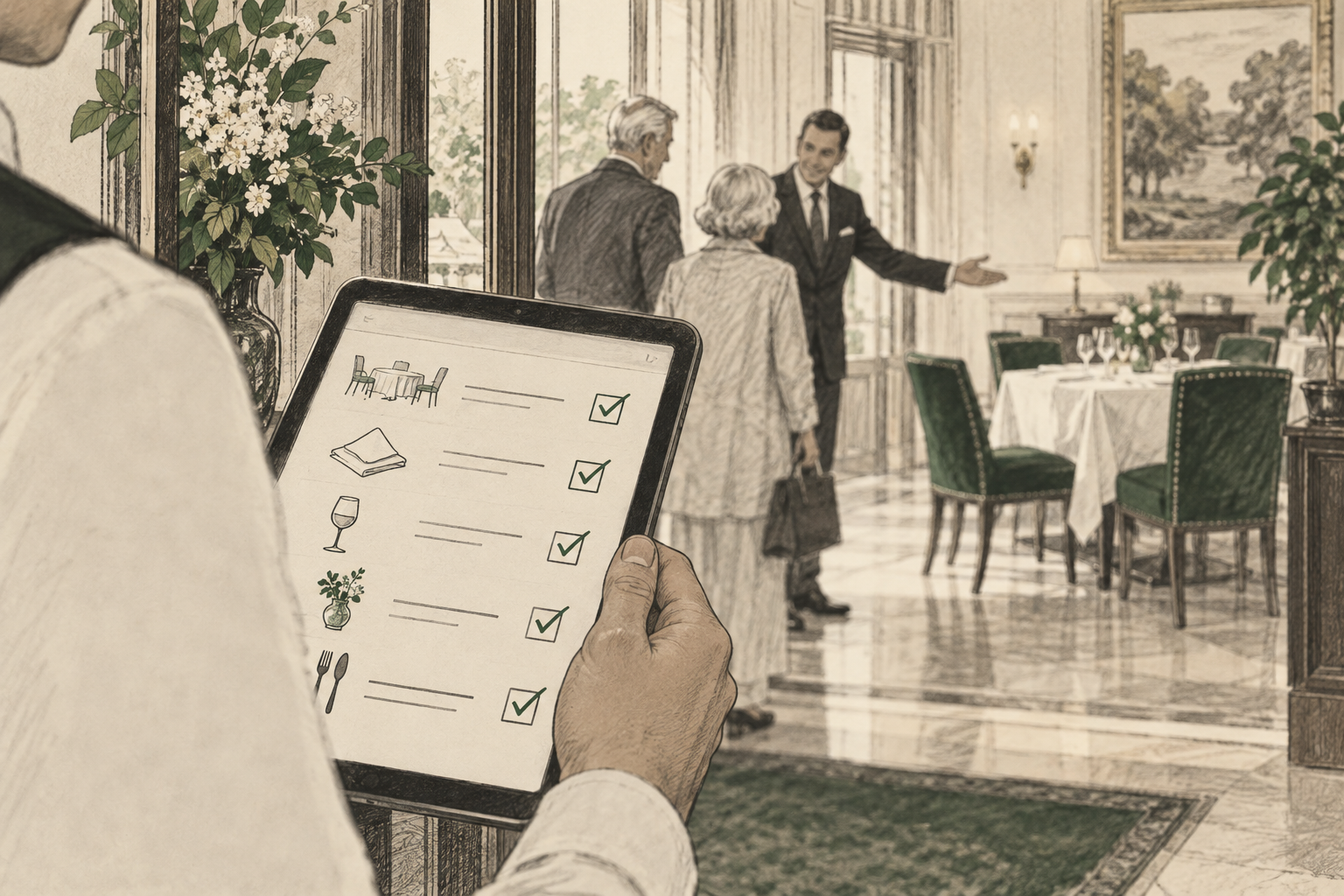
ArticleMember Recognition
Country Club Staff Communication Problems: A Practical Fix List
Country club staff communication problems usually come down to ownership. Learn how to use a six-part message loop and a practical checklist to ensure member requests never fall through the cracks.
October 26, 2026ReadKnownly
See Knownly in your club
A short walkthrough of how service standards become tasks your staff actually complete.
Book a demo