Article
How to Create a Consistent Member Experience Across Club Departments
Learn how to bridge the gaps between club departments to ensure members receive consistent service, unified answers, and seamless handoffs during every visit.
David LeibellOctober 22, 20267 min read

To create a consistent member experience across departments, a club must define unified service standards, assign owners to the "seams" where departments meet, and audit these transitions by following real member journeys from arrival to departure. Consistency does not require every department to behave identically. Instead, it ensures a member receives the same quality of answers, response times, and follow-through whether they are in the golf shop, the grill, or the fitness center.
Members experience a club as a single entity, but staff often operate in silos defined by different budgets, software systems, and managers. When a member moves from one area to another, information frequently fails to follow them. This guide outlines how to identify whether service gaps are departmental or structural and how to build a framework that bridges the gaps between your teams.
Why members see one club and staff see separate departments
Private clubs are naturally organized by department to manage complex operations. Golf runs on a tee sheet, dining on a point-of-sale (POS) system, and administration on a club management system. According to Club Benchmarking, performance metrics are typically categorized by department—such as membership, club operations, and food and beverage—because that is how budgets and labor are managed.
The challenge is that a member’s afternoon does not follow a P&L. While a department head focuses on their specific area, the transitions between them—like the walk from the pro shop to the dining room—often belong to no one. When these transitions fail, member loyalty is at risk. Club Benchmarking’s research on member loyalty suggests that social bonding with staff is one of the four pillars of "attachment," which bridges the gap between simple satisfaction and long-term loyalty.
When service feels fragmented, the impact is measurable. In a 2024 GGA Partners survey of 3,750 members, 34% of respondents indicated that decreased service levels could prompt them to leave their club. Despite this, club leaders typically only hear from the 17% to 22% of members who are actively dissatisfied, meaning a lack of consistency often goes unvoiced until a member decides not to renew.
What should be consistent (and what shouldn't)
Consistency is not the same as standardization. The golf shop and the grill room should have different tones, paces, and atmospheres to suit their functions. What must remain uniform is the underlying promise of the club.
- Response Standards: Every department should follow the same rule for returning calls or emails, such as a "same business day" policy.
- Unified Answers: Policies regarding guests, reservations, and dress codes must be identical across the club. Conflicting answers signal to the member that the club lacks a single voice.
- Shared Knowledge: If a member shares a preference or a problem with one staff member, that context should be available to the next department they visit. Achieving this level of member recognition requires moving data out of departmental silos.
- Request Ownership: If a request requires two departments to collaborate, one specific person must own the task until the member receives a final answer.
Mapping the seams: where departments meet
Members are most likely to be "dropped" at the seams—the points where a journey transitions between teams. Identifying these common failure points is the first step toward fixing them.
| Seam | Common Information Loss | Typical Solution |
|---|---|---|
| Golf to Dining | Delays or dietary notes don't reach the host. | Starter sends a brief alert to the grill when groups finish. |
| Front Desk to Staff | Callbacks are lost on sticky notes or verbal messages. | A shared digital log for all member callbacks. |
| Events to Operations | Outing details arrive at the locker room or grill too late. | A mandatory event brief distributed 48 hours in advance. |
| Membership to All | New member promises (tours, lockers) are never relayed. | A weekly new-member list with assigned task owners. |
| Operations to Membership | Changes in usage (e.g., a drop in rounds) go unnoticed. | Monthly usage reviews between department heads. |
| Between Any Two Teams | "I'll check on that" results in no follow-up. | The person who receives the request owns it until closure. |
For a deeper look at managing these moments during a single visit, see our guide on continuity beyond the first greeting.
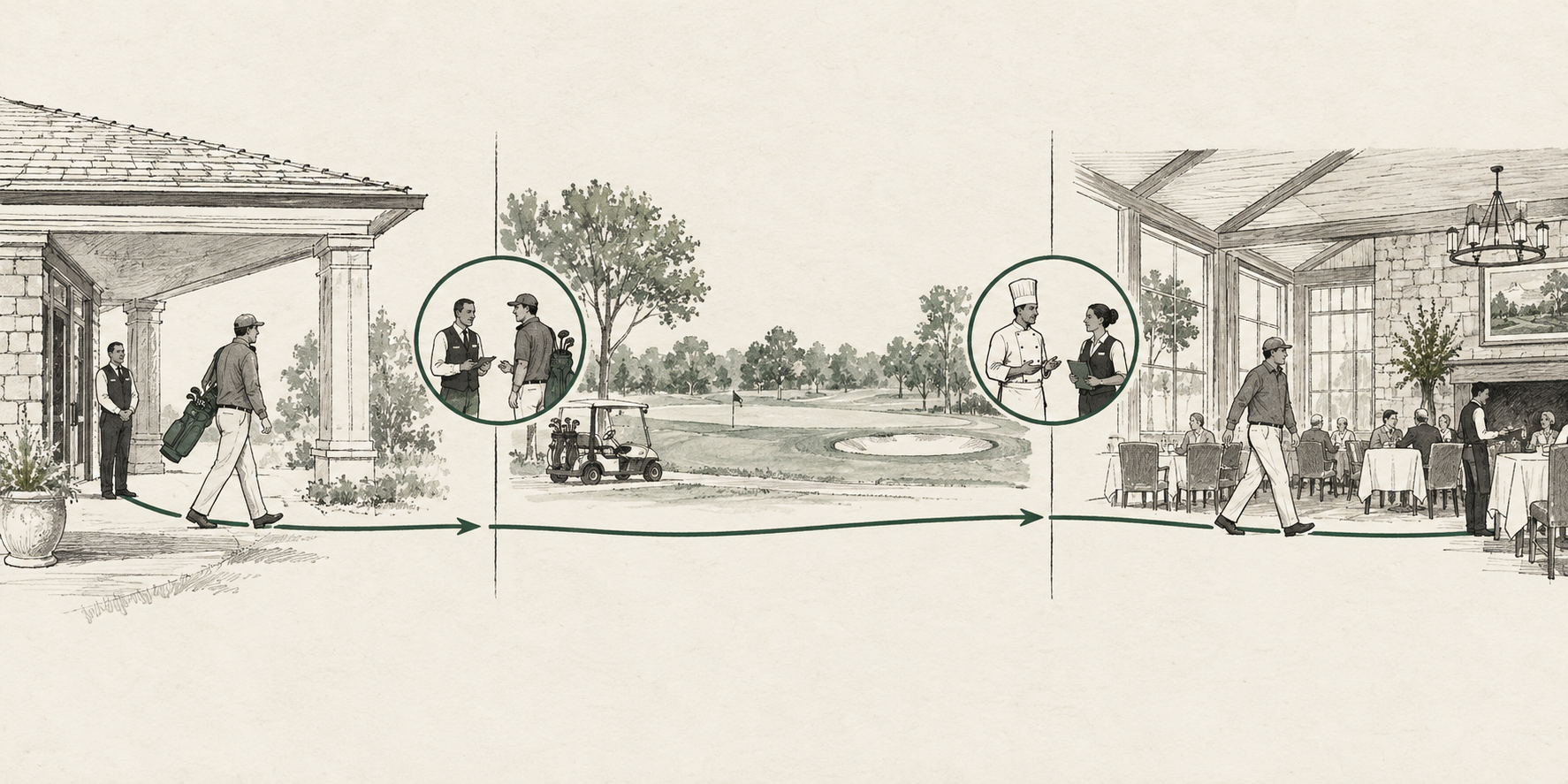
Identifying the root cause of inconsistency
Before attempting to bridge departments, you must determine if the problem is a "seam" issue or an internal department failure. For example, Club Benchmarking’s 2026 food and beverage whitepaper, based on 247,000 responses, found that dining satisfaction is primarily driven by preparation consistency and food quality—elements managed entirely within the kitchen.
Use this simple triage to categorize service misses:
- Departmental Problem: The same error happens repeatedly within one area (e.g., slow service in the grill). This requires internal training or better staffing.
- Seam Problem: The miss happens during a transition (e.g., the grill didn't know the member was coming from the pro shop). This requires better handoff protocols.
- Standards Problem: Two departments give different answers to the same question. This is a leadership issue that requires updating the club’s central policies.
A test you can run: follow the journey
Service designers use a tool called a "service blueprint" to map customer experiences against back-of-house operations. You can run a simplified version by following one member (or a staff member acting as a guest) through a visit that crosses at least three departments.
Observe the visit without interfering and note every time:
- The member has to repeat information the club already knows.
- A promise is made without a specific owner or timeframe.
- A staff member gives an answer that contradicts another department.
Once the visit is over, categorize the failures. Information that existed but wasn't shared requires a routing fix. Information that was never captured requires a habit fix through training. Information that was captured but was inaccessible at the moment of service requires a workflow automation fix.
Who should own the seams?
While departments have managers, the transitions between them also need an owner. In modern club leadership, this role often falls to an Assistant GM, Director of Club Operations, or Member Experience Director. This individual must have the authority to ask any department head for process changes and a dedicated slot in weekly leadership meetings to review "seam" performance.
Technology plays a critical role when manual handoffs fail. While a daily brief or a "stand-up" meeting helps, it cannot account for mid-visit changes or data trapped in separate software systems. This is the difference between systems of record and systems of action. While your club management software stores data, a presence-aware service orchestration platform ensures that data reaches the right employee at the exact moment the member crosses a seam.
Frequently asked questions
- What does a consistent member experience mean in a private club?
- Consistency means members can rely on the same standards, answers, and follow-through across the entire club. It does not mean every department must have the same tone or pace, but rather that the 'promise' of the club remains uniform regardless of the department.
- Who should be responsible for member experience across departments?
- Member experience should be owned by a single person, such as the Assistant GM or Director of Club Operations. This role needs the authority to coordinate between department heads and a dedicated place in the weekly leadership agenda to address service handoffs.
- How do you measure consistency across departments?
- The most effective way is to 'shadow' a member visit. Follow a single journey from arrival to departure and document every time a promise is unowned, a member has to repeat themselves, or two departments provide conflicting information.
David Leibell
Published October 22, 20267 min read
Knownly
See how to map your member journeys
Tell us where you are and we'll talk through what this looks like on your floor.
Related reading
ArticleMember Recognition
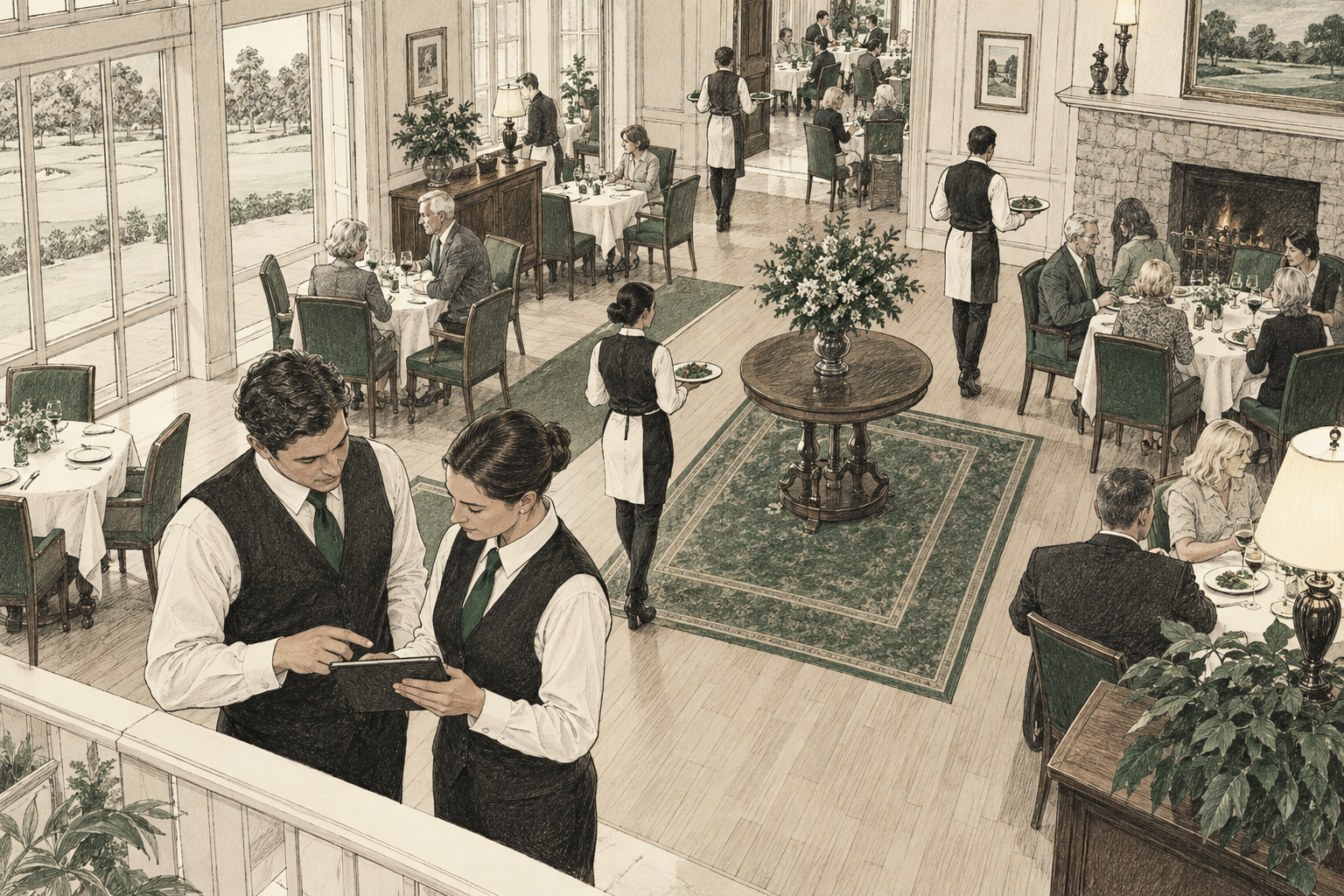
How to Improve Service Consistency at a Country Club
Improve consistent service delivery at your country club across shifts and seasonal staff using a structured handoff procedure, role matrix, and onboarding checklist.
October 29, 2026Read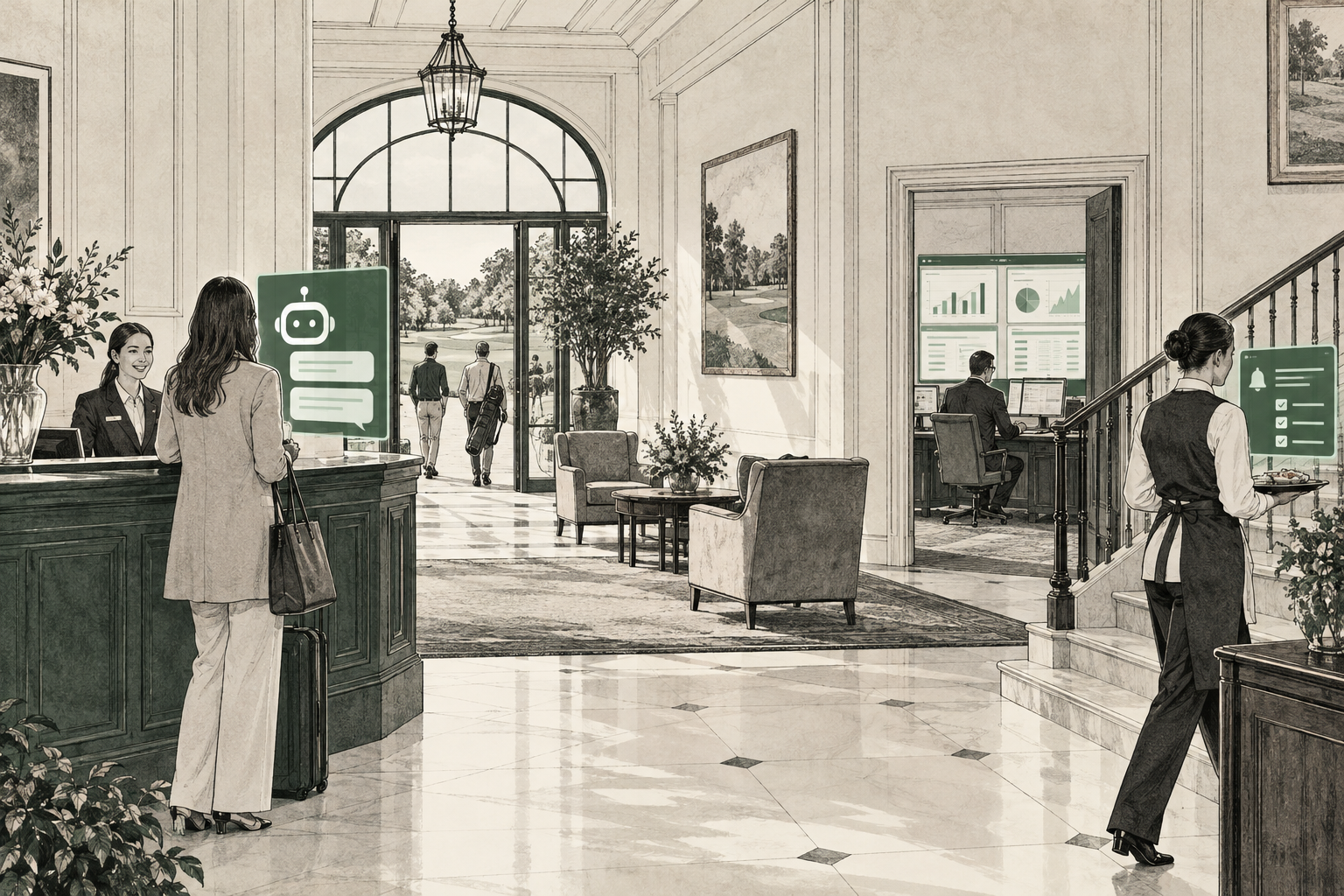
ArticleMember Recognition
Best AI Software for Private Clubs: What Each Type Actually Does
Compare six types of AI software for private clubs, from chatbots to orchestration tools, and use our buyer scorecard to evaluate vendors.
October 27, 2026Read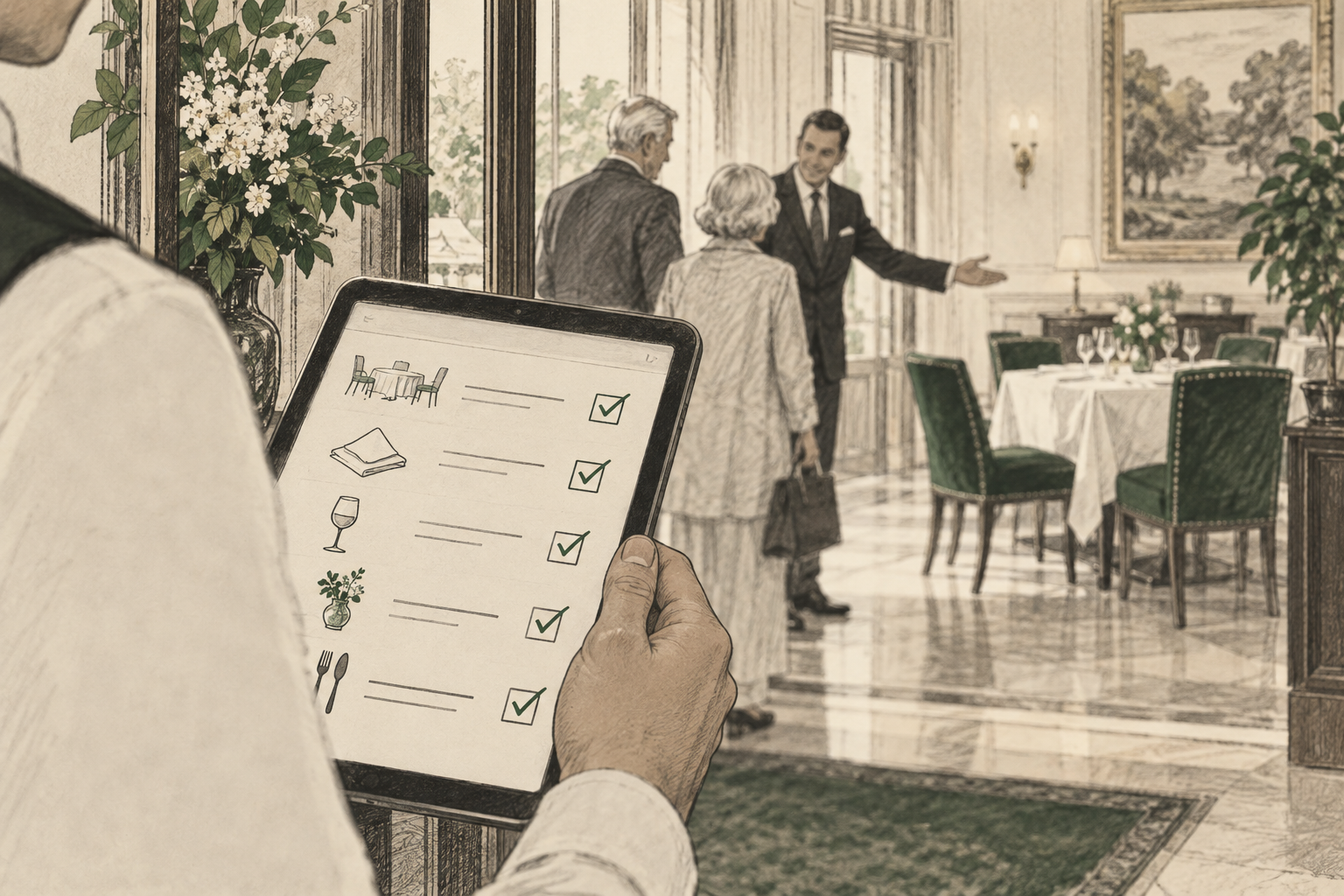
ArticleMember Recognition
Country Club Staff Communication Problems: A Practical Fix List
Country club staff communication problems usually come down to ownership. Learn how to use a six-part message loop and a practical checklist to ensure member requests never fall through the cracks.
October 26, 2026ReadKnownly
See Knownly in your club
A short walkthrough of how service standards become tasks your staff actually complete.
Book a demo